Artists to Watch – Africa 2026
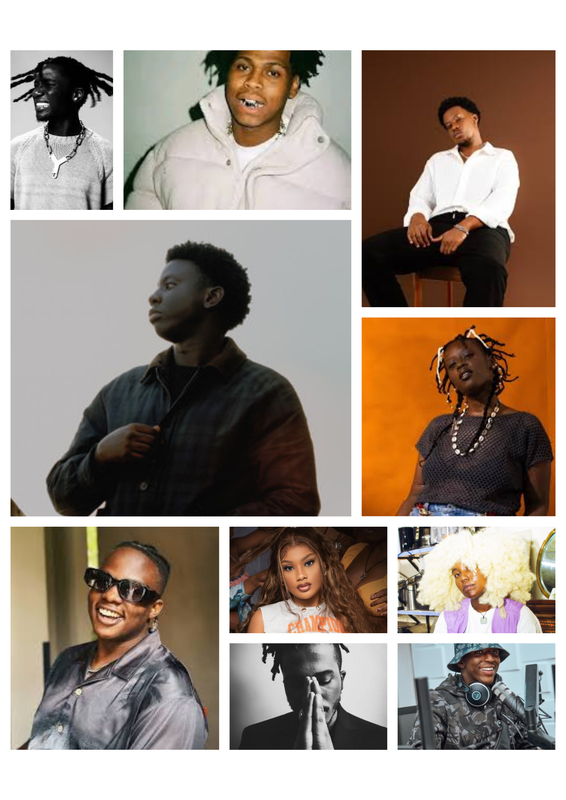
The 16 Acts Defining the Next Era of African Music
Africa is not “next.” It is now.
Streaming data shows Afrobeats has grown more than 550% globally between 2017 and 2022, while amapiano streams have surged over 5,000% since 2018. African artists are selling out arenas in London, Paris, Toronto, and New York. TikTok is minting overnight hits from Kampala to Kinshasa. Major labels are doubling down on African signings.
But beyond the megastars lies a sharper story — a generation of artists building the next layer of the continent’s sound. These are not just viral moments. They are architects.
Here are 16 Artists to Watch – Africa 2026.
🇺🇬 Jeatee (Uganda)
Sound: Afrobeat, alté, Afro-swing
Jeatee represents Uganda’s introspective alt-pop current. His 2024 Afrobeat single “TWB Riddim” established him as a melodic risk-taker, weaving Afro-swing bounce with reflective lyricism. On collaborations like “Sentimental” (feat. Ramb3), he leans into emotional storytelling without sacrificing groove.
Jeatee’s appeal lies in restraint. He does not oversing. He builds atmosphere. In a region dominated by high-energy dance records, his textured approach feels deliberate — and exportable.
🇺🇬 Soundlykbb (Uganda)
Sound: Afrobeat, reggae fusion
Entebbe’s Soundlykbb moves between Afrobeat warmth and reggae cadence with ease. His album Made in Entebbe introduced him as a grounded storyteller, but it was “ZAABU” — named after the Luganda word for gold — that amplified his reach.
In 2025, he won Uganda Hip Hop Awards’ Song of the Year for “Nas in Fashion”** (with Axon & Denim Cartel). His catalog now includes regional favorites like “Thursday” (with Kaaboo & Tai Dai), and he maintains tens of thousands of monthly listeners on Spotify, with audiences stretching from Kampala to Nairobi and Lagos.
Soundlykbb’s strength is consistency. He builds records that travel.
🇺🇬 Tai Dai (Uganda/Kenya)
Sound: East African hip-hop, alt-rap
Tai Dai operates in the pocket between lyrical sharpness and underground energy. She appears on collaborative cuts like “Thursday” and has been central to Kampala’s evolving rap scene.
Her style pulls from drill, trap, and Afro-urban textures — minimal hooks, tight flows, heavy basslines. Tai Dai isn’t chasing crossover appeal. She’s building credibility.
🇺🇬 Senté (Uganda)
Sound: Afro-fusion, melodic hip-hop
Senté blends hip-hop cadence with R&B warmth. His Afro-fusion identity is rooted in real-life storytelling — songs that sit between reflection and rhythm.
While his catalog remains emerging, his positioning within Uganda’s creative wave makes him one of the most intriguing long-term bets.
🇺🇬 Akeine (Uganda)
Sound: Afro-soul, jazz, blues
Laura Mujuni “Akeine” Blessing is not chasing trends. She is building a body of work.
Her debut single “Wanted” and EP Niwe Akeine introduced a voice shaped by jazz, blues, reggae, and soul influences. Later releases like “Untold” and “Saving My Love” (feat. Kohen Jaycee) deepen her Afro-soul lane.
Akeine performs with a live band, Bakeine, and cites Miriam Makeba and Mariah Carey among her inspirations. In a streaming-driven world, she still believes in musicianship.
🇺🇬 CXNRVD (Uganda)
Sound: Afro-dancehall, hip-hop fusion
Conrad Rutakirwa, aka CXNRVD, is Kampala’s genre disruptor. His EP RWA (Remember We’re Awake) blended dancehall, Afrobeat, jazz, and hip-hop with sharp social commentary.
Tracks from RWA gained radio traction locally, and his ability to switch from melodic hooks to rap cadences makes him unpredictable. CXNRVD isn’t boxed into one scene — and that’s precisely his edge.
🇰🇪 tg.blk (Kenya)
Sound: Alternative hip-hop, DIY rap
When tg.blk released “Love Being Used,” it exploded — surpassing 4 million streams with minimal industry machinery. The track’s lo-fi production and unapologetic lyricism positioned her as one of Kenya’s most promising alt-rap voices.
Her EP ITS NOT THAT DEEP expands that raw energy. She raps about vulnerability, desire, identity — all over stripped-down beats that feel intentionally unpolished.
tg.blk represents the internet-native African artist: global aesthetic, local perspective.
🇺🇬 Kalibwani (Uganda)
Sound: Drill, vernacular hip-hop
Kalibwani brings street-rooted intensity to Uganda’s drill movement. His delivery leans gritty and grounded, blending Luganda storytelling with hard percussion.
Emerging tracks circulating in Kampala’s underground have built him a cult audience. His trajectory mirrors early drill movements globally — raw first, polished later.
🇨🇩 Rebo Tchulo (DR Congo)
Sound: Afro-R&B, modern Congolese pop
Rebo first gained recognition working with Ferre Gola before launching her solo career. Her breakout single “Mbote” and emotional ballad “Pepele” gained massive YouTube traction, with Pepele surpassing one million views rapidly.
Her 2024 hit “Choquer” climbed to No. 2 on DR Congo’s YouTube charts. In 2025, she signed with Def Jam Africa and released “Antidote,” signaling crossover ambition.
Rebo merges Congolese rumba influence with modern Afropop sheen — emotionally resonant and club-ready.
🇿🇦 Usimamane (South Africa)
Sound: Hip-hop, house-influenced rap
Durban’s Usimamane delivered one of 2024’s biggest South African records with “Cheque,” certified triple platinum. His debut album 20th: Days Before Maud broke streaming records locally, generating hundreds of thousands of streams in days.
He blends trap flows with kwaito and house textures — a uniquely South African hybrid that feels stadium-sized.
🇿🇦 Zee Nxumalo (South Africa)
Sound: Amapiano, Afro-house
Zee Nxumalo is amapiano’s melodic evolution. Her single “Funk 55” went multi-platinum, while collaborations like “Thula Mabota” and “Ama Gear” strengthened her presence on South African charts.
Her ability to move between amapiano grooves and soulful vocal passages makes her more than a club act. She’s shaping the genre’s emotional side.
🇿🇦 Mawelele (South Africa)
Sound: Afropop, R&B
Mawelele’s collaboration “All My Life” (with Kwesta) introduced him to wider audiences. He followed with melodic singles like “Naledi”, expanding his Afropop-meets-R&B identity.
His music leans romantic, polished, and radio-ready — a lane South Africa increasingly embraces.
🇳🇬 Shoday (Nigeria)
Sound: Afropop, R&B
Shoday’s breakout singles “Dey 4 You” and “Caution” combine Afrobeats bounce with emotional R&B vulnerability. His EP BRKFST showcased range, while collaborations with Bella Shmurda and co-releases with Kizz Daniel positioned him within Nigeria’s commercial ecosystem.
He writes love songs that feel modern, not sentimental.
🇨🇮 Ameka Zrai (Ivory Coast)
Sound: Ivoire pop, Afrotrap
Ameka Zrai blends French and Nouchi over Afrotrap beats. Tracks like “Happiest” highlight his melodic trap approach, merging Coupé-Décalé rhythms with global drill aesthetics.
Francophone Africa is gaining international attention — and Ameka stands at its forefront.
🇬🇭 Xlimkid (Ghana)
Sound: Afro-trap, drill
Xlimkid’s “Valley of Trappers” (feat. Sarkodie) cemented him as Ghana’s next trap star. Songs like “Betrayed” reveal emotional depth behind the aggression.
Named Apple Music’s Up Next artist in Ghana, he represents a generation of artists who balance vulnerability with street realism.
🇹🇿 Abigail Chams (Tanzania)
Sound: Bongo flava, Afropop, R&B
Abigail Chams is East Africa’s polished pop contender. Her single “Me Too” (feat. Harmonize) topped Tanzanian charts and gained millions of views. Earlier attention came when Beyoncé reposted her cover of “Brown Skin Girl.”
A multi-instrumentalist trained in piano and violin, Chams merges musicality with mainstream ambition. She is not just viral. She is strategic.
The Bigger Picture
Afrobeats Is Expanding
Afrobeats continues global dominance, crossing 14 billion annual streams worldwide. Collaborations with Western pop stars are normal — not rare.
Amapiano Is Exporting
Amapiano has moved from township sound to global festival staple, influencing artists beyond South Africa.
TikTok Is the Accelerator
Songs now break via dance challenges before radio. Uganda, Kenya, and Nigeria are particularly active ecosystems.
Labels Are Investing
Def Jam Africa, Sony, Warner, and Atlantic are signing across regions, including Francophone Africa.
Touring Is Surging
African artists are headlining international festivals and expanding diaspora tours.
Final Word
Africa’s music story in 2026 is not singular. It is plural.
From Kampala’s alt-rap spaces to Johannesburg’s amapiano dominance, from Lagos’ Afropop machine to Abidjan’s rising Afrotrap wave — the continent is not chasing global relevance.
It is setting it.
And these 16 artists are writing the next chapter.